A hybrid dermatology clinic combines an online channel with a physical one, so that most routine cases are handled remotely and the clinic room is reserved for what genuinely needs it. Done well, the two channels feel like one practice to the patient and to the clinician. Done badly, they become two disconnected systems with two inboxes, two records and twice the confusion. The difference is almost entirely in how the model is designed, not in the technology alone.
Decide what belongs online and what belongs in the room
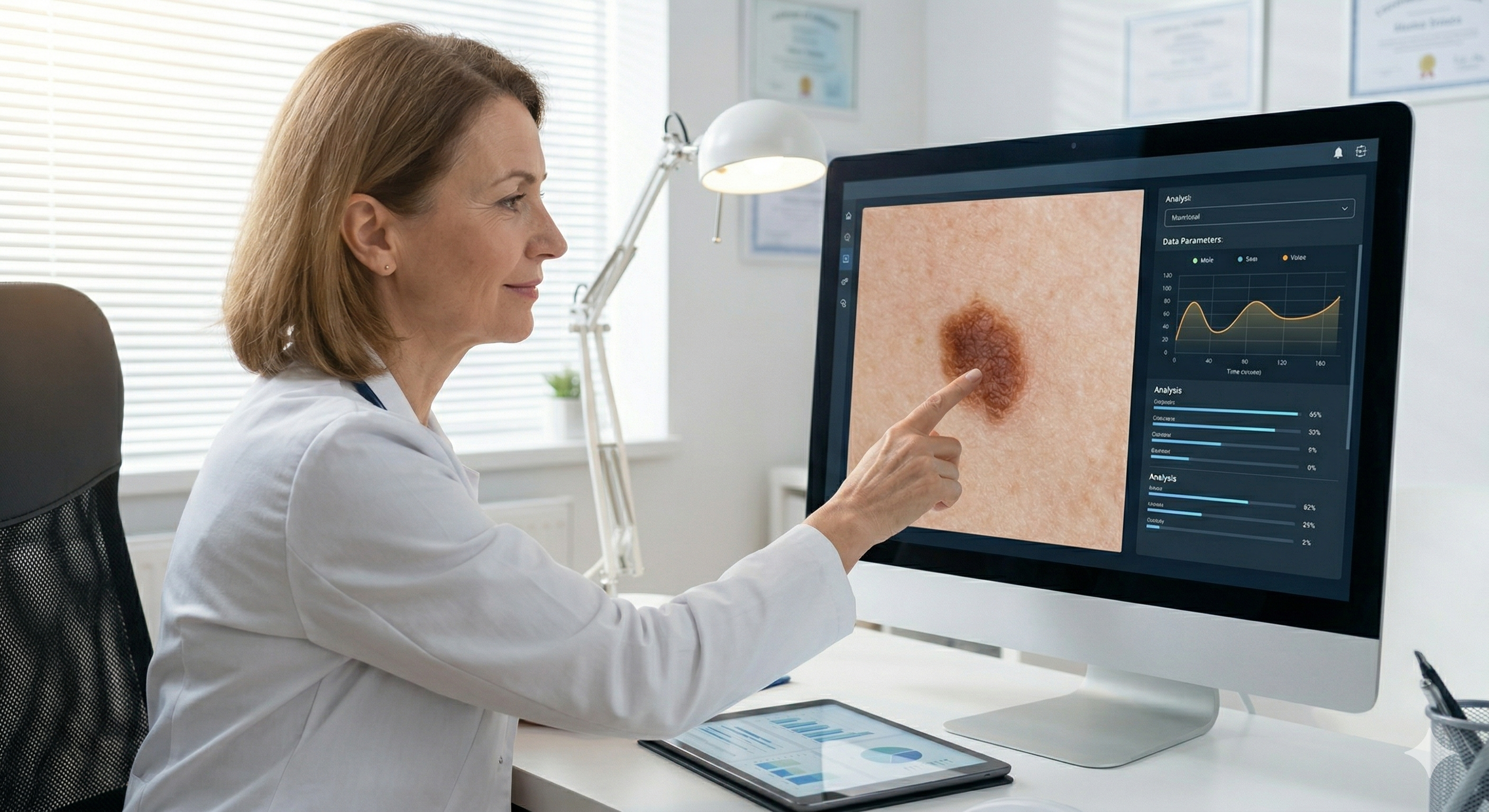
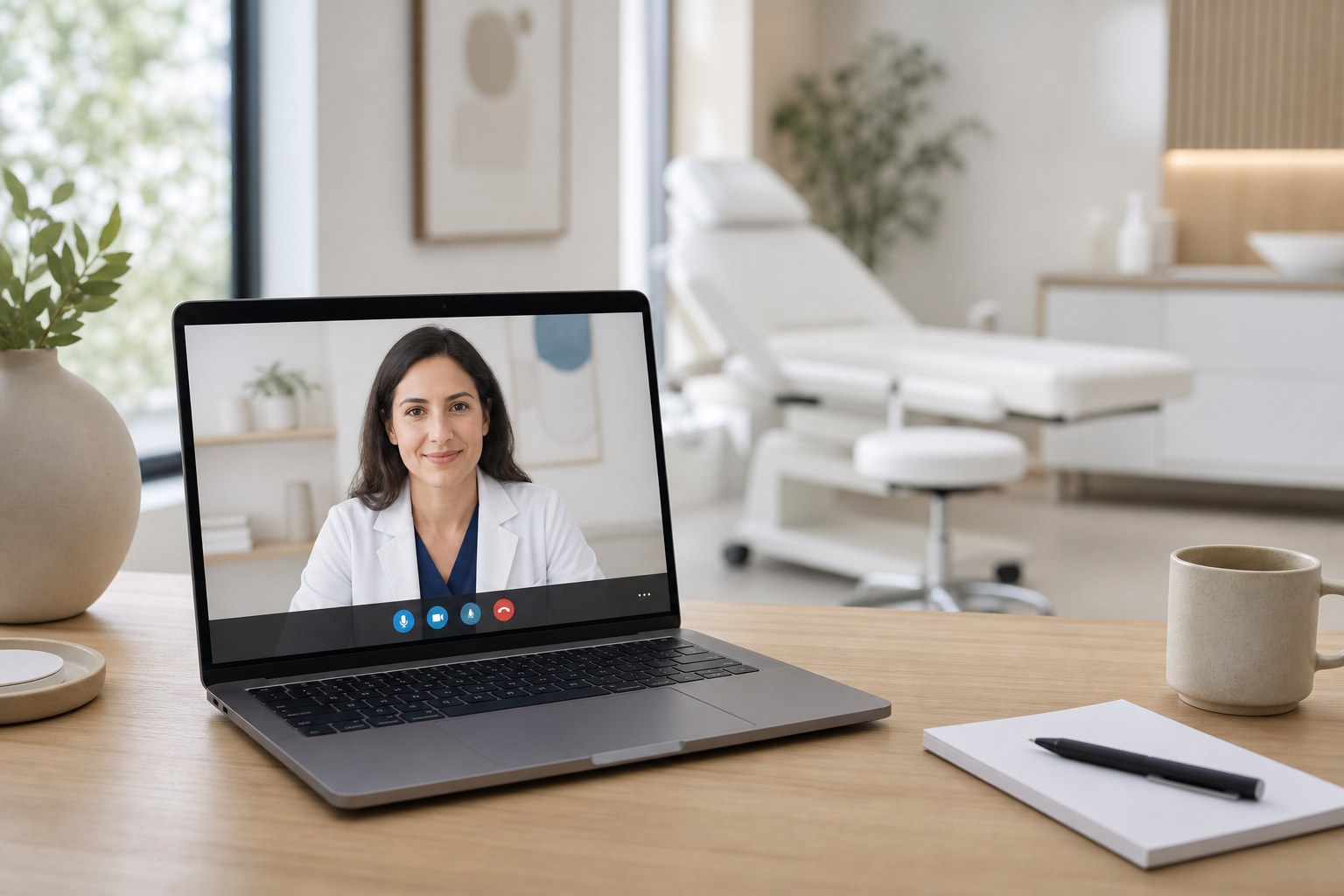
A hybrid model rests on a clear rule for routing. Some presentations can be assessed remotely from a structured questionnaire and clinical images — a stable rash, a follow-up on a known condition, a single well-photographed lesion. Others need a physical examination, a procedure, or hands-on assessment: a full-skin check, dermoscopy of a changing mole, anything likely to need a biopsy. Writing this rule down, and agreeing it across the team, is what stops the online channel from filling with cases that should have gone straight to a room, and stops the clinic filling with cases a screen could have handled. If the remote side is new to you, our overview of what teledermatology is sets out where it fits.
Keep one patient record across both channels
A common failure of a hybrid clinic is a split record: the online history lives in one place and the in-person notes in another. A patient who starts online and later comes in should not have to repeat their story, and the clinician should see the whole picture in one view. One record across channels is what keeps the model safe and coherent.
Protect in-person capacity for what only it can do
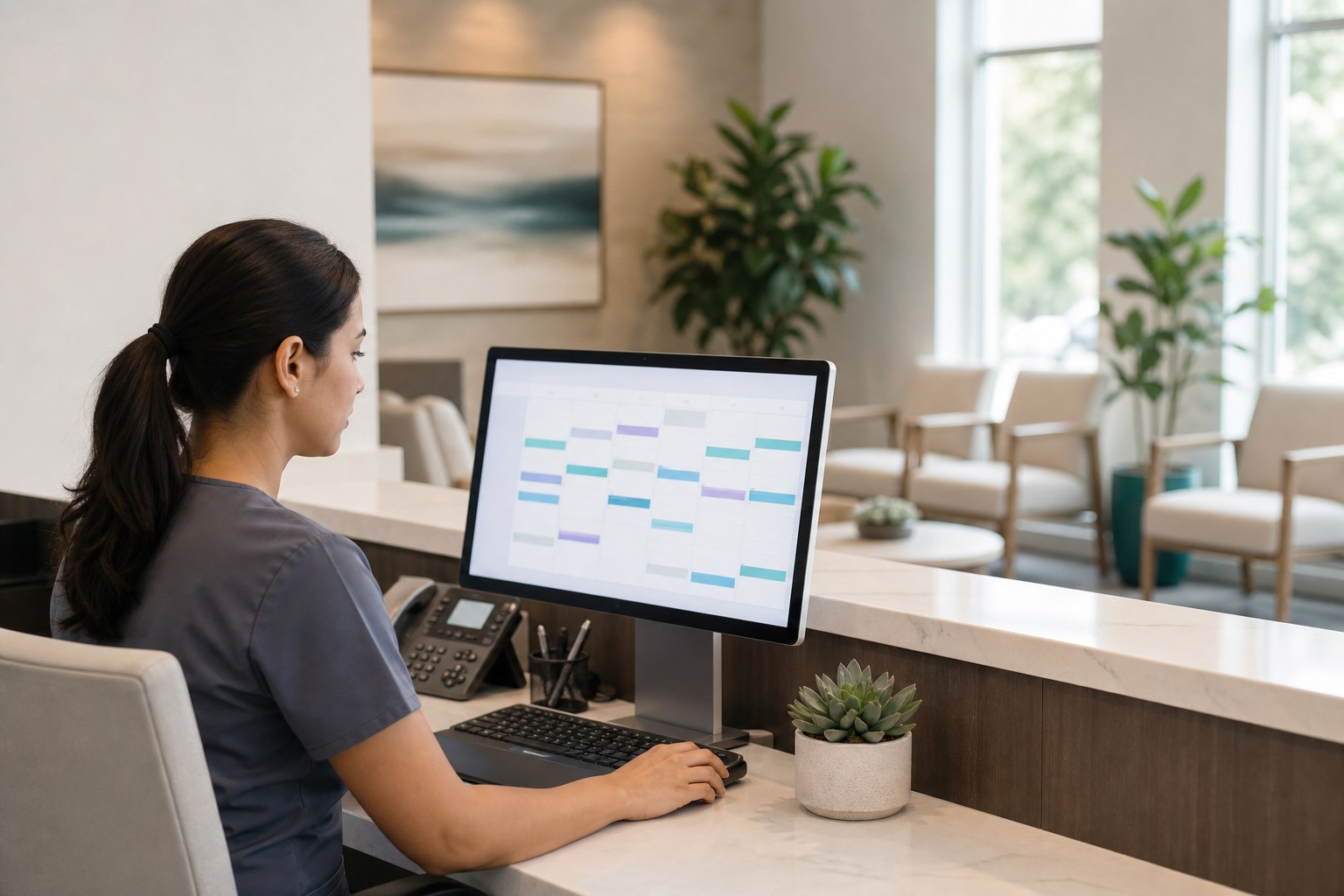
The economic payoff of going hybrid is simple: scarce physical capacity stops being spent on cases that never needed it. That only holds if scheduling actively protects those slots, routing suitable cases to the remote channel by default so the calendar keeps room for examinations and procedures. Without that discipline, the online channel simply adds volume on top of an already-full clinic instead of relieving it.
Design the patient journey as one path
From the patient's side there should be a single front door rather than a fork they must choose at. A common pattern is an online entry point for everyone, from which cases are routed: handled remotely where appropriate, or booked for an in-person visit where needed. Escalation from online to in-person should be smooth and expected, and never a dead end that forces the patient to start again. When the routing is invisible to the patient, the experience feels like one attentive practice.
Give the team clear roles across channels
A hybrid clinic asks staff to work in two modes, and ambiguity about who does what is where things break. Be explicit about who reviews asynchronous cases and when, who manages the online-to-in-person handover, and how the day is structured so that remote review and in-person sessions do not collide. Asynchronous work is flexible, which is a benefit only if it is given protected time rather than squeezed between appointments.
Hold both channels to one standard of documentation
Records, consent and secure handling of images and data have to meet the same standard whether a case is online or in person. A hybrid model can actually make this easier, because a shared platform applies consistent documentation and audit trails across everything — but only if it is set up that way from the start rather than bolted on once the two channels have already drifted apart. The operational side of the appointment book, meanwhile, is covered in our guide to reducing no-shows.
Measure the mix, not just the totals
A hybrid clinic needs its own metrics. Watch the channel mix — the share of cases handled remotely versus in person — along with how often online cases are escalated to a visit, and the utilisation of your protected in-person slots. These show whether the model is doing its job: absorbing routine demand remotely while keeping physical capacity for the cases that require it.
Roll it out narrow, then widen
The safest way to become hybrid is not to convert the whole practice at once. Start with one clear pathway — a single common presentation, or follow-ups for an existing group of patients — prove the routing, records and roles work end to end, and widen from there. A narrow, working pilot teaches you more than a broad launch that strains every part of the clinic simultaneously.